
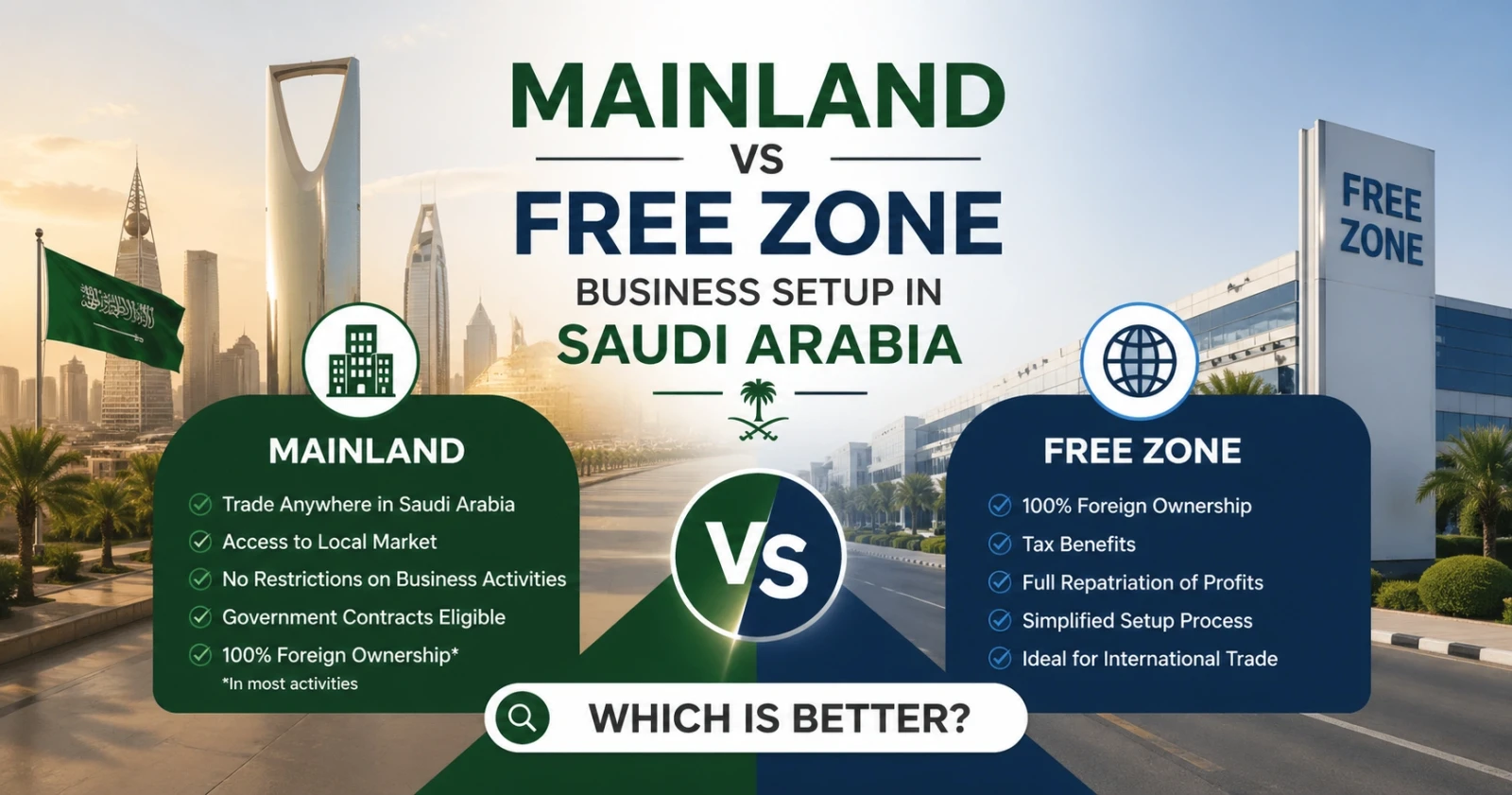
If you are planning to expand your business in the Middle East, understanding Mainland vs Free Zone Saudi Arabia is crucial. Saudi Arabia is rapidly transforming into a global business hub, attracting investors with its Vision 2030 reforms, improved infrastructure, and investor-friendly policies. However, choosing between a mainland company and a free zone entity can significantly impact your operations, costs, and growth potential.
In this guide, we’ll break down everything you need to know about Mainland vs Free Zone Saudi Arabia, helping you make a confident and informed decision.
Understanding Business Setup Options in Saudi Arabia
Before diving into comparisons, it’s important to understand what each setup means.
A mainland company allows you to operate anywhere within Saudi Arabia without restrictions. On the other hand, free zones are designated economic areas offering incentives such as tax benefits and simplified regulations.
When evaluating Business setup in Saudi Arabia mainland vs free zone, the choice depends on your business goals, target market, and operational flexibility.
Mainland vs Free Zone Saudi Arabia: Key Differences
1. Market Access
A mainland company provides unrestricted access to the Saudi market. You can trade directly with local clients, government bodies, and private sectors.
Free zone companies, however, are typically limited to operating within the free zone or conducting international trade. To sell in the local Saudi market, they may need a local distributor.
This makes mainland companies ideal for businesses aiming for strong domestic presence.
2. Ownership Structure
Historically, foreign investors required a local sponsor for mainland companies. However, recent reforms have allowed 100% foreign ownership in many sectors, making mainland setups more attractive.
Free zones often offer full ownership without restrictions, making them appealing for international entrepreneurs seeking control.
3. Cost of Setup and Operations
Free zones usually offer lower setup costs, quick registration, and bundled packages including office space and licensing.
Mainland businesses may involve higher costs due to licensing, office requirements, and regulatory compliance. However, the broader opportunities often justify the investment.
4. Business Activities
Mainland companies can engage in a wide range of commercial activities across the country.
Free zones may limit activities based on the zone’s specialization (e.g., logistics, technology, or manufacturing).
5. Office Requirements
Mainland companies typically require a physical office space in Saudi Arabia.
Free zones often provide flexible solutions such as shared offices or virtual offices, reducing initial investment.
Mainland vs Free Zone Saudi Arabia: Advantages of Each
Mainland Company Advantages
Understanding Mainland company advantages Saudi Arabia helps highlight why many investors choose this route:
- Ability to trade freely within Saudi Arabia
- Access to government contracts
- No restrictions on business location
- Greater credibility with local clients
These benefits make mainland companies ideal for businesses targeting the Saudi domestic market.
Free Zone Benefits
When exploring Saudi Arabia free zone benefits, several advantages stand out:
- 100% foreign ownership
- Tax incentives and customs benefits
- Simplified licensing process
- Lower startup costs
Free zones are particularly suitable for startups, exporters, and international trading companies.
Free Zone vs Mainland Company Saudi Arabia: Which Suits You?
Choosing between Free zone vs mainland company Saudi Arabia depends on your business objectives.
If your focus is on international trade or cost efficiency, a free zone setup may be the right choice. However, if you want to build a strong presence within Saudi Arabia, a mainland company offers unmatched flexibility.
For example, retail businesses, construction firms, and service providers often prefer mainland setups, while e-commerce exporters and tech startups lean toward free zones.
Explore More:- student visa for saudi arabia | saudi temporary work visa | saudi tourist visa
Legal and Regulatory Considerations
Saudi Arabia has made significant progress in simplifying business regulations. However, compliance requirements differ between mainland and free zone entities.
Mainland companies must adhere to Saudi commercial laws and may require approvals from multiple authorities. Free zones typically have independent regulatory frameworks, making processes faster and more streamlined.
Working with experts like Saudi Visa Agency can help navigate these legal complexities and ensure a smooth setup process.
Taxation and Financial Implications
Taxation is another critical factor when comparing Mainland vs Free Zone Saudi Arabia.
Mainland companies are subject to corporate tax and VAT regulations applicable in Saudi Arabia. Free zones, on the other hand, often offer tax exemptions or reduced rates, depending on the zone and business activity.
However, businesses planning long-term expansion should weigh tax savings against market access limitations.
Scalability and Growth Potential
A mainland setup provides better scalability for businesses planning to expand across Saudi Arabia. With no geographical restrictions, you can open branches, hire employees, and engage with government projects.
Free zones are excellent for initial growth and international operations but may require restructuring if you later decide to enter the local market.
Which is Better Mainland or Free Zone Saudi Arabia?
The question Which is better mainland or free zone Saudi Arabia doesn’t have a one-size-fits-all answer. It depends on your priorities:
If your goal is local market penetration, government contracts, and long-term expansion, mainland is the better choice.
If you prioritize cost savings, ease of setup, and international trade, free zones offer significant advantages.
Ultimately, aligning your business model with the right structure is key to success.
Expert Recommendation
From a strategic perspective, many investors start in free zones to minimize costs and risks, then transition to mainland as their business grows.
Consulting professionals like Saudi Visa Agency ensures that you choose the right structure from the beginning, avoiding costly changes later.
Conclusion
Choosing between mainland and free zone business setup in Saudi Arabia is a critical decision that impacts your growth, operations, and profitability. While mainland companies offer unrestricted access and scalability, free zones provide cost-effective and flexible solutions for international businesses.
Understanding the differences in Mainland vs Free Zone Saudi Arabia helps you align your investment with your long-term goals. Carefully evaluate your target market, budget, and expansion plans before making a decision.
Frequently Asked Questions
1. What is the main difference between mainland and free zone companies in Saudi Arabia?
Mainland companies can operate anywhere in Saudi Arabia, while free zone companies are restricted to specific zones or international trade.
2. Can a free zone company do business in Saudi Arabia?
Yes, but usually through a local distributor or partner.
3. Is 100% foreign ownership allowed in mainland Saudi Arabia?
Yes, in many sectors due to recent government reforms.
4. Which option is more cost-effective?
Free zones are generally more affordable for startups and small businesses.
5. Which setup is better for long-term growth?
Mainland companies offer better scalability and access to the local market.



Leave a Reply
0 Comments